






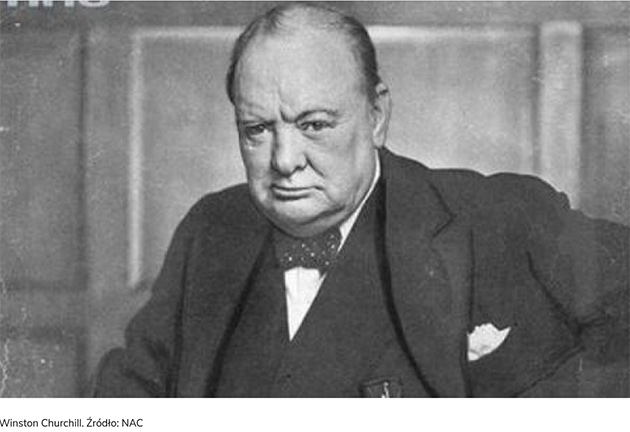
Who would ever have imagined that 80 years after Winston Churchill’s historic speech, “From Stettin in the Baltic to Trieste in the Adriatic, an iron curtain has descended across the Continent”, someone would come up with an idea to divide Europe along the very same lines again?
And yet, Times Higher Education (THE) has invited rectors at institutions from Poland, Czech Republic, Slovakia, Hungary, Slovenia, Croatia, Romania, Bulgaria, Lithuania, Latvia, Estonia and Ukraine to the launch of a special new Central and Eastern Europe Spotlight Edition of the World University Rankings later this month.
It is amazing that anyone engaged in the world of higher education, nearly four decades after the fall of the Berlin Wall and over two decades after the enlargement of the European Union, could try to reenact the infamous division of the continent, implying, not so subtly, that there are still two academic Europes, the better one and the one that is aspiring to be better at best.
Cross-European alliances
Aside from ethical considerations, the THE project goes head-on against the direction European higher education has been following. In 36 European countries there are already 73 transnational European alliances – also called European universities – networks of deep institutional collaboration connecting over 500 higher education institutions cooperating across borders, spanning EU member states and several non-EU countries.
Where, in the THE project, does Erasmus+ fit? It is, after all, the main financial and structural driver behind the European Universities Initiative that has grown from a small student exchange initiative into a comprehensive EU policy instrument with a budget of €26.2 billion (US$29.3 billion) for 2021 to 2027. Students, academics and university staff move en masse across Europe and are not even aware of the line THE ranking relies on.
What about joint European degrees (often called joint or double degrees), offered cooperatively by multiple higher education institutions across different European countries?

The same question applies to Horizon Europe, the European Union’s flagship research framework programme for 2021 to 2027, which has a total budget of €95.5 billion. There is only one such programme in Europe. Projects submitted by researchers are assessed according to the same criteria, whether they come from researchers working in Germany, Slovenia or France.
An ill-defined region
In the THE scenario, where do we place the European University Association (EUA), representing over 900 members (including universities, national rectors’ conferences and affiliated organisations and networks) across 48 countries of Europe? If the assumption behind the THE Central and Eastern European (CEE) rankings is correct, wouldn’t European universities’ interests be better represented by two different organisations: the EUA and the Central and Eastern European University Association?
There is a saying describing the concept of a CEE region – “Show me your Central Europe and I will tell you who you are”. THE is smart enough to wriggle out of answering what makes CEE a region other than that a bunch of countries were forcibly locked out and separated against their will from the rest of Europe for half a century?
The letter THE sent to rectors in the CEE countries says that the new ranking “will be a unique, new regional lens exclusively of CEE nations, filtered directly from the THE World University Rankings 2027”.
A regional approach to rankings makes sense but only if the region is properly defined, such as the Arab Region or the Central Asia region. In this case, however, THE has failed to demonstrate that Central and Eastern Europe possesses the characteristics of a bona fide higher education region.
Methodology
What’s more, the word ‘filtered’ in essence contradicts the regional nature of the new CEE ranking. If you want to make a regional ranking, first try to find indicators that are characteristic for the specific region.
The THE team, instead, chose an easy way out, selecting a bunch of countries and extracting data on their institutions from the database it had gathered for its global rankings. This brings a welcome advantage; the ranking, even with some adjustments in the methodology, may be cheap to make.
Ranking analysts point out that rankings extracted from global rankings have built-in flaws that derive from the very nature of the methodology of the main ranking. Even limited changes assigned to a particular indicator relating to the top university may cause serious shifts lower down the ladder.
Consequently, if there are two universities in a regional or national ranking that have exactly the same data year-on-year, their position may change only because of a change at the top of the global ranking. These kinds of rankings lack stability; they are prone to errors.
One may think that the bulk or at least a significant part of international collaborations between universities and researchers will happen within a particular region. A quick check in Elsevier’s SciVal tells the opposite story.
In Poland, the largest CEE country, 39.4% of all publications relate to international collaborations, compared to only 8.3% that relate to the 10 CEE countries (except Ukraine). Characteristically, Polish collaboration with researchers in the US alone surpasses its collaboration with researchers in the CEE area.
The same is true with regard to international student mobility. Again, in Poland there are 4,570 students from all 10 CEE countries (5% of the total international student body). There are more international students from just one country (Türkiye) outside the CEE.
The illusion of success
Finally, one has to ask what the purpose of the new CEE ranking is? It has been spelt out in the letter to rectors. The CEE annual rankings will be “offering stronger regional visibility for marketing, reputation and brand development for institutions operating within comparable systemic context”.
In other words, your university may not be high enough in the global rankings…so THE has created a ranking that will shield you from the towering universities of the West so you can bask in glory.
This would be like telling Chinese rectors early in 1990 to disregard Harvard, Oxford or MIT and to focus on their own region where they stand out against countries of a similar political background, the likes of Mongolia, North Korea and Vietnam.
Hopefully, rectors of universities in the countries assigned to the CEE group won’t be placated by the illusion of success the THE CEE rankings may offer and will choose, instead, the gruelling but ambitious “European University+ Long March”.
A good handful of these universities have no need to bow their heads. Charles University, Masaryk University and the Czech Technical University in Prague, Poland’s University of Warsaw and Jagiellonian University, as well as Hungary’s Eotvos Lorand University, University of Szeged and Semmelweis University are already ahead of dozens of universities in France, Germany and other countries on the ‘other’ side of the new ranking curtain in the Shanghai, THE and QS rankings.
The CEE countries, once Europe’s poor relatives under Communist rule, have already demonstrated that they are able and dynamic competitors when it comes to the economy. They will do the same in higher education too. They don’t need to be locked into a CEE special zone.
Waldemar Siwinski and Kazimierz Bilanow
Waldemar Siwinski is the founder of the Perspektywy Education Foundation, Poland, and president of the IREG Observatory on Academic Ranking and Excellence. Kazimierz Bilanow is an associate at the Perspektywy Education Foundation.
This article is a commentary. Commentary articles are the opinions of the authors and do not necessarily reflect the views of University World News.